50 / 18210 · Module 2 — Major Scales, Scale Degrees, Key Signatures, and the Circle of Fifths← prev⊞ allnext →
2.27Why the Circle of Fifths matters beyond key signatures
The Circle of Fifths is not just a memorization diagram.
It tells you several things at once:
- neighboring keys are closely related
- key signatures change systematically
- dominant relationships follow fifths
- many common chord progressions move through fifths
For example:
E7 → A → D → G → C
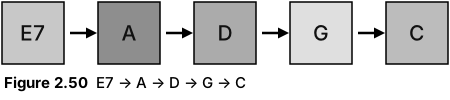
That movement follows descending fifths.
Jazz harmony is full of this.
Eventually you'll look at the Circle and see routes of harmonic motion, not merely key names.