Module 5 — Harmonic Function: Tonic, Predominant, Dominant, and Why Chords “Want” to Go Somewhere
This module is one of the most important in the whole course.
Up to now, we have treated chords mostly as objects:
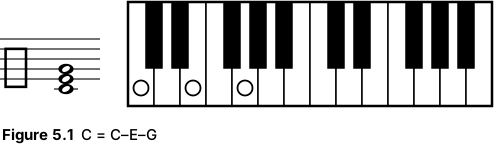
C = C–E–G
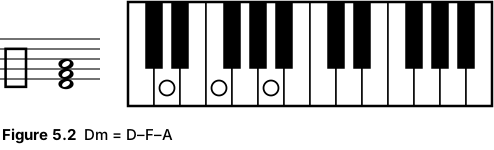
Dm = D–F–A
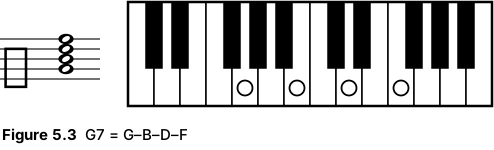
G7 = G–B–D–F
Now we start treating chords as roles in a story.
The key idea is:
Chords are not equally stable. Some feel like home, some create motion, and some create tension that strongly wants resolution.
That is harmonic function.
5.1The three big functionsIn a major key, chords can be grouped roughly into three families:5.2Tonic = homeIn C major:5.3Dominant = tensionIn C major:5.4Predominant = prepares the dominantThe most obvious predominant in C is:5.5The basic harmonic sentencePlay slowly:5.6Why Roman numerals are so usefulSuppose someone says:5.7Not all tonic-family chords are IIn C major, these chords often have tonic-like behavior:5.8Tonic substitutionsPlay:5.9Predominant familyIn C major, the strongest common predominant chords are:5.10Dominant familyThe strongest dominant chords are:5.11The family mapIn a major key, a useful practical grouping is:5.12Example: C–Am–Dm–G7In C major:5.13This progression is everywherePlay:5.14Why ii–V–I matters so muchTake the last three chords:5.15Voice leading explains why ii–V–I works so wellDm7:5.16The dominant can be preceded by many thingsIn C:5.17CadencesA cadence is a harmonic arrival or punctuation point.5.18Authentic cadenceThe strongest basic ending:5.19Plagal cadenceAnother ending:5.20Half cadenceA progression that stops on V:5.21Deceptive cadenceHere is a very useful trick.5.22Hear the deceptionPlay:5.23Progressions are like grammarCompare these random chords:5.24Harmonic rhythmAnother important concept:5.25Melody often tells you when harmony should changeSuppose a melody holds G for several beats.5.26Same melody note, three emotionsPlay a G in your right hand.5.27Functional substitutionSuppose your progression is:5.28Try replacing chords by familyOriginal:5.29Why B° leads to CB°:5.30Functional analysis of a familiar patternTake:5.31Compare a loop versus an endingPlay:5.32Dominant preparationTry:5.33Circle-of-fifths movement appears againLook at the roots:5.34A preview of secondary dominantsIn C major, E major is technically not diatonic because it contains:5.35Functional ear training: don't name chordsHave someone—or yourself, with eyes closed after placing your hand—play:5.36Practical exercise: predict the next chordPlay:5.37Melody harmonization exerciseTake a very simple melody in C.5.38Practice with "Happy Birthday"Don't worry about reproducing a canonical harmonization yet.5.39Your harmonic vocabulary so farIn C major you now know:•Homework for Module 5Spend about 25–30 minutes.•Module 5 mini-testTry without looking at the answers.