156 / 18210 · Module 5 — Harmonic Function: Tonic, Predominant, Dominant, and Why Chords “Want” to Go Somewhere← prev⊞ allnext →
5.34A preview of secondary dominants
In C major, E major is technically not diatonic because it contains:
G♯
But:
E7 → Am
works beautifully.
Why?
Because E is the dominant of A.
So we temporarily treat Am as a destination:
E7 → Am
Then continue:
Am → Dm → G7 → C
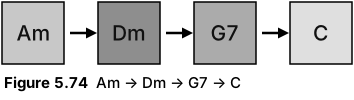
This gives:
E7 → Am → Dm → G7 → C
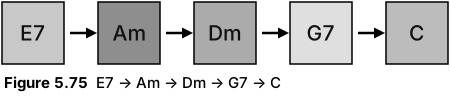
Notice the roots:
E → A → D → G → C
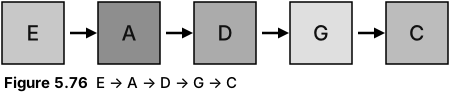
A chain of fifths.
This is exactly the sort of structure your original chord diagram was showing.