Homework for Module 27
A. Basic waltz
Play:
C | Am | F | G | C
in 3/4 with:
bass – chord – chord.
Keep beats 2 and 3 lighter.
B. Smooth waltz voicings
Use the same progression but minimize RH movement.
Then add:
G/B or F/A to improve bass motion.
C. Three waltz textures
Play one progression as:
- oom-pah-pah
- one-note-per-beat arpeggio
- wide Romantic arpeggio
Record all three.
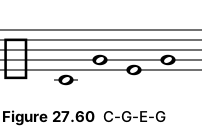
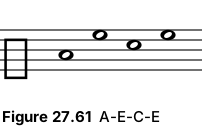
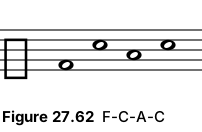
D. Alberti bass
Practice:
C-G-E-G
A-E-C-E
F-C-A-C
G-D-B-D
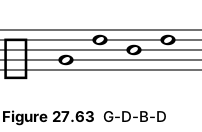
under a simple RH melody.
Keep LH quiet and even.
E. 6/8
Take:
C-Am-F-G
Play each chord in a 6/8 rocking pattern.
Count:
ONE-two-three FOUR-five-six
Do not let it turn into 3/4.
F. Suspension
Practice:
G7 → C
with:
F → E
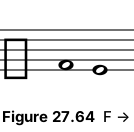
held/resolved in the melody or inner voice.
Then:
D → C
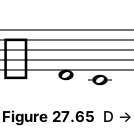
over tonic.
G. Minor waltz
Play:
Am | Dm | E7 | Am
then:
Am | A7 | Dm | E7 | Am
Hear the chromatic line:
C → C♯ → D.
H. Passing diminished
Use:
C | C♯°7 | Dm | G7 | C
one chord per 3/4 bar.
Voice-lead smoothly.
I. Meter transformation
Take one familiar 4/4 melody.
Recast its first 8 bars into 3/4.
Do not simply compress the rhythm mathematically.
Rephrase it.
J. Complete classical-style arrangement
Take a simple melody and include:
- 3/4 or 6/8 transformation
- smooth bass line
- at least one suspension
- one arpeggiated texture
- one contrasting texture
- one chromatic or diminished passing move
- deliberate cadence
- clear dynamic arc
Record the arrangement.