Homework for Module 24
A. Melody projection
Take five different RH chords.
Place melody on top.
Practice making the top note clearly louder than the inner notes.
Do this very slowly.
B. Three LH textures
For:
Cmaj9 → Am9 → Dm9 → G13
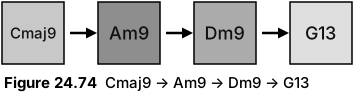
play:
- roots only
- root + fifth
- root–5–10 broken pattern
Keep RH the same.
Compare.
C. Rubato intro
Create a four-chord intro:
Cmaj9 → A7 → Dm9 → G13
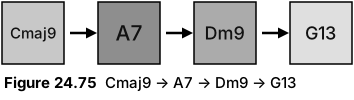
Play it:
- in strict time
- rubato
Then begin melody in steady time.
D. Suspensions
Practice:
G13sus → G13 → Cmaj9
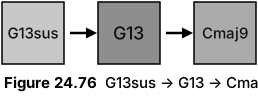
and:
C/F-type 4–3 suspension: F → E
over C.
Let the tension breathe.
E. Ballad fills
Take a melody with phrase gaps.
Allow:
- maximum 3 notes per fill on first pass,
- maximum 5 on second.
Record both.
Choose which sounds better.
F. Reharmonization levels
Play the same phrase four ways:
- triads
- 7ths/9ths
- secondary dominants
- one borrowed chord or tritone substitution
Do not assume #4 wins.
G. Dynamic form
Play one tune three times:
First pass
piano, sparse.
Second
mezzo-piano/mezzo-forte, fuller.
Third
climax, then fade to sparse ending.
This is arrangement practice, not merely dynamics practice.
H. Complete ballad arrangement
Your main assignment:
Create a 2–4 minute solo piano arrangement of one simple melody containing:
- short intro
- clear first statement
- richer repeated statement
- at least one fill
- one secondary dominant
- one borrowed chord
- one deliberate bass line/inversion
- one suspension/delayed resolution
- one climax
- intentional ending
Record it in one take.
Don't aim for perfection. Listen afterward for whether the musical architecture is clear.