Homework for Module 30
A. One motif, ten versions
Take:
C-D-E-G
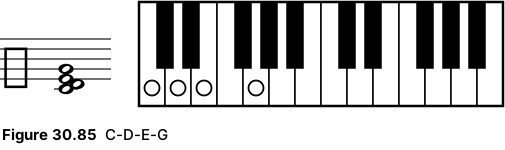
Create:
- ornamented
- rhythmically displaced
- augmented
- diminished
- sequenced
- fragmented
- inverted
- retrograde
- octave-displaced
- paraphrased
Play them all.
B. Preserve rhythm
Take a familiar 4-bar melody.
Keep its rhythm exactly.
Change pitches while preserving broad contour and phrase endings.
C. Preserve pitches
Now keep the pitches.
Create three different rhythmic versions.
D. Sequence
Take a 3-note motif.
Sequence it:
- diatonically
- exactly/chromatically
- through chord tones of a ii–V–I
E. Fragmentation
Take a familiar tune.
Choose only its most recognizable 2–3 note fragment.
Create an 8-bar improvisation using mostly that fragment.
F. Octave displacement
Take a plain scale-based phrase.
Move 2–3 notes to another octave.
Keep the same pitch classes.
Make it still singable.
G. Major-to-minor transformation
Take a melody in C major.
Create a C-minor version.
Decide deliberately how to treat degree 7.
Compare the emotional change.
H. Style transformation
Take one melody and perform it five ways:
- jazz ballad
- blues
- pop
- waltz/classical
- bossa
First keep the melody literal.
Then make one style-specific melodic change in each version.
I. Eight-level variation
Choose a simple tune and record:
- literal
- accompanied
- ornamented
- rhythmically varied
- sequenced/fragmented
- reharmonized
- contrapuntal
- paraphrased
This is the major assignment for Module 30.