Homework for Module 20
A. Function identification
In C, play random chords from:
C, Am, Em, Dm, F, G7, B°
Classify them only as:
- tonic family
- predominant
- dominant
Then identify exact chord.
B. Bass first
Play or listen to five simple progressions.
First reproduce only the bass roots.
Then add chord quality.
C. I-IV-V harmonization
Take three simple melodies you know.
Harmonize them using only:
I, IV, V7
Then add vi or ii where your ear wants them.
D. Hear ii versus IV
Compare:
Dm → G7 → C
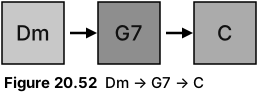
with:
F → G7 → C
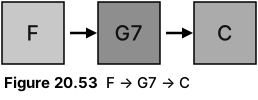
Sing the bass while playing.
Learn the difference between the two predominant choices.
E. Hear I versus vi
Compare:
C → F
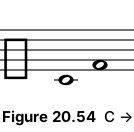
with:
Am → F
Then:
C → G7
versus:
Am → G7
Listen for tonic versus tonic-substitute character.
F. Inversion drill
Play:
C → G/B → Am → F/A → G
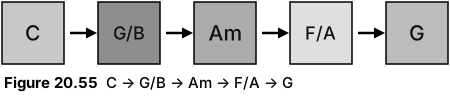
Identify:
- harmony
- bass notes
separately.
G. Chromatic recognition
Practice these:
E7 → Am
A7 → Dm
C♯°7 → Dm
F → Fm → C
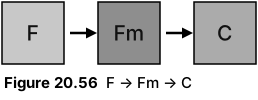
For each, identify the altered note by ear.
H. Reduction
Take one recording with harmony you can roughly hear.
Write only:
- key
- bass roots
- major/minor/dominant
- one chord per harmonic change
Do not worry about extensions.
Then make a second pass for 7ths and colors.
I. Backward cadence exercise
Choose tonic:
C.
Construct five different phrases ending:
? → ? → C
Try:
F-G7-C
Dm-G7-C
A7-Dm-G7-C
F-Fm-C
B°7-C
Hear how each prepares the destination differently.