60 / 18210 · Module 3 — Minor Scales, Relative Keys, and Why Minor Harmony Behaves Differently← prev⊞ allnext →
3.7The problem with the natural-minor dominant
Play:
Em → Am
Notes:
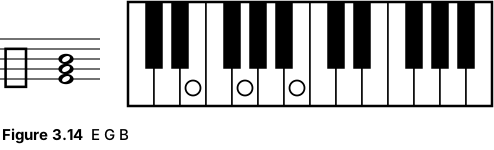
Em:
E G B
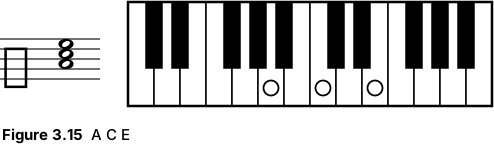
Am:
A C E
Now compare:
E7 → Am
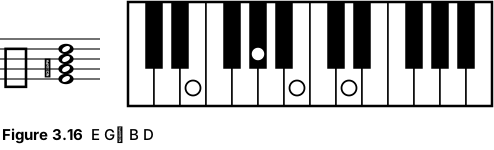
E7:
E G♯ B D
Am:
A C E
Which one sounds like a stronger arrival?
Usually:
E7 → Am
Much stronger.
Why?
Because:
G♯ → A
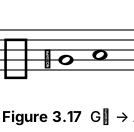
is a half-step resolution.
G♯ is the leading tone to A.
But A natural minor has G natural, not G♯.
So tonal harmony often changes the 7th degree.
This gives us harmonic minor.