Homework for Module 8
Spend 30–35 minutes.
A. One progression, six textures
Use:
C – Am – F – G7
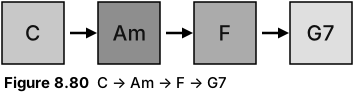
Play:
- block chords
- bass + chord
- Alberti
- straight arpeggio
- open fifth + upper chord
- stride-lite
B. Waltz
Play:
C – Am – Dm – G7
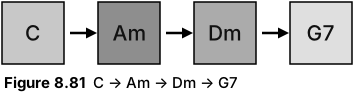
in 3/4:
bass-chord-chord.
Then make the right-hand voicings smooth.
C. 6/8
Take the same progression and create a flowing 6/8 arpeggio.
Count aloud:
1-2-3 4-5-6
D. Melody + accompaniment
Choose a familiar melody.
First:
LH roots only.
Then:
LH root/fifth.
Then:
LH broken chords.
Keep the melody clearly louder.
E. Dynamic form
Take an 8-bar melody.
Bars 1–4:
sparse accompaniment.
Bars 5–8:
fuller accompaniment.
Make the second phrase feel larger without changing the melody.
F. Phrase-ending treatment
At each cadence, deliberately change the texture:
- fuller chord
- pause
- slower arpeggio
- octave bass
- or silence before resolution
G. Record comparison
Record one short melody in three styles:
waltz
ballad
pop-ish
Use the same harmony.
Listen back without looking at your hands.
The styles should be distinguishable by rhythm and texture alone.