Homework for Module 12
A. Secondary dominants in C
Memorize and play:
A7 → Dm
B7 → Em
C7 → F
D7 → G
E7 → Am
and:
G7 → C
For each one, identify the chromatic note that creates the leading-tone pull.
B. Enriched progression
Practice:
Cmaj7 → E7 → Am7 → A7 → Dm7 → G7 → Cmaj7

First block chords.
Then smooth inversions.
Then shells.
C. Chromatic inner lines
Hear and play:
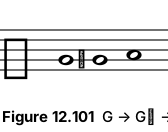
G → G♯ → A
over:
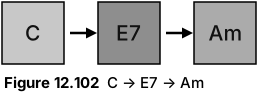
C → E7 → Am
Then:
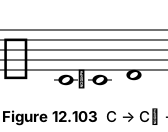
C → C♯ → D
over:
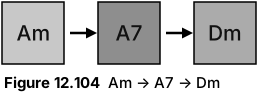
Am → A7 → Dm
Then:
F → F♯ → G
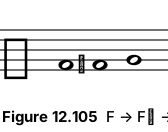
over:
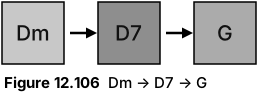
Dm → D7 → G
D. V7/V
Practice:
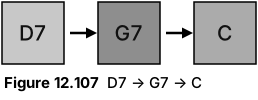
D7 → G7 → C
then transpose:
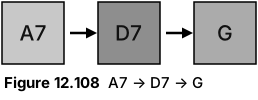
A7 → D7 → G
and:
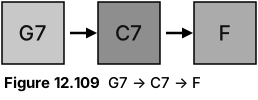
G7 → C7 → F
E. Three levels of approach
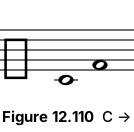
Choose destination F.
Play:
C → F
then:
C7 → F
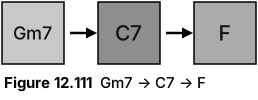
then:
Gm7 → C7 → F
Repeat with destination G.
F. Melody check
Take a simple melody you already harmonized.
Insert one secondary dominant.
Then ask:
- Does the melody note fit?
- Does the chromatic alteration clash?
- Can a different voicing solve it?
- Is the extra tension actually desirable?
G. Improvisation
Loop:
Cmaj7 | E7 | Am7 | A7 | Dm7 | G7 | Cmaj7
Use mostly chord tones.
Make sure you deliberately play:
G♯ over E7
and:
C♯ over A7
at least occasionally.
Hear those notes resolving upward.